 Stampede Design
The worst thing I used to do after finishing a design was to just immediately submit it.
I used to use my gut feeling and intuition to tell what’s good and what’s not, even for critiquing my own designs and work.
Not because I was careless. I genuinely believed I had been thorough. I had spent hours on it. I believed I had looked at it from every angle. It felt right and that ‘feeling’ was the problem.
Being close to your work is not the same as understanding it. And for a long time, I confused the two.
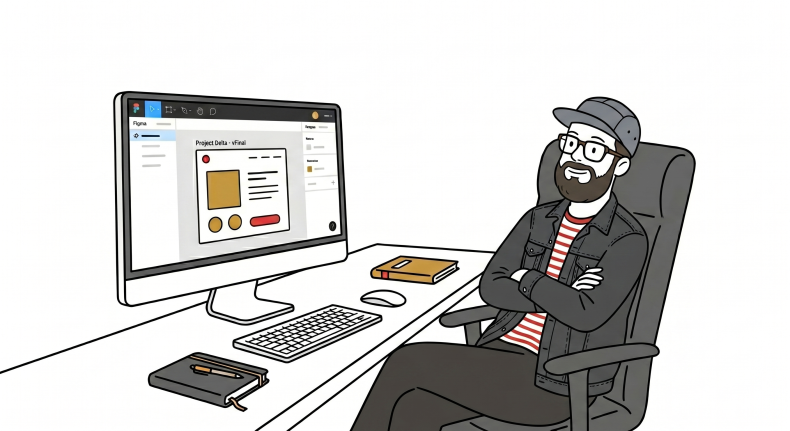
Skipping self-critique has real consequences. They just tend to show up at the worst possible moment. Work gets submitted with decisions that were never challenged. When a reviewer asks why something was done a certain way, the designer either can’t answer or scrambles to reconstruct a rationale they’ve already forgotten, or hasn’t ever considered.
Inconsistencies slip through. A spacing rule applied on one screen but ignored on the next. A hierarchy that made sense in isolation but breaks down across the flow. Trust erodes quietly. Not because the designer lacks skill, but because the work still carries the fingerprints of someone who was too close to it when they called it done.
Over time, the absence of self-critique doesn’t just affect the output. It limits how fast you grow. Without the habit of interrogating your own decisions, you stop building the vocabulary to explain your craft to yourself, your team, and the people you are designing for.
The real design self-critique failure mode isn’t laziness
Usually, designers do look at their work before submitting. That’s not where the gap is.
The gap is that they critique against nothing.
No ground. No principles. No framing. The review becomes: does this look right? Does this feel good? And because you made it, it almost always does. Your eye is already calibrated to what you built, not to what was actually needed.
This is especially common for middleweight designers. Not because we are less capable, but because nobody explicitly teaches this in our culture, especially if you’re self thaught. You learn to execute. You learn to iterate. But the practice of interrogating your own decisions before anyone else does is rarely discussed, rarely modelled, and in many design teams here in Malaysia, rarely even practised.
The word ‘critique’, already carries weight in Malaysian context. It sounds like conflict. It sounds like something that happens to your work, not something you do for it. That mindset has to change.
Design self-critique needs a ground
Here is what I have learned: self-critique is not a final step. It is only possible if you have set the foundation upfront.
Before you open Figma, before you write the first word, before you decide on a layout, ask yourself: what user outcome am I solving for? What principles am I carrying through this work? What does good actually look like here?
That is your ground. Everything you build gets measured against it, not against whether it looks polished.
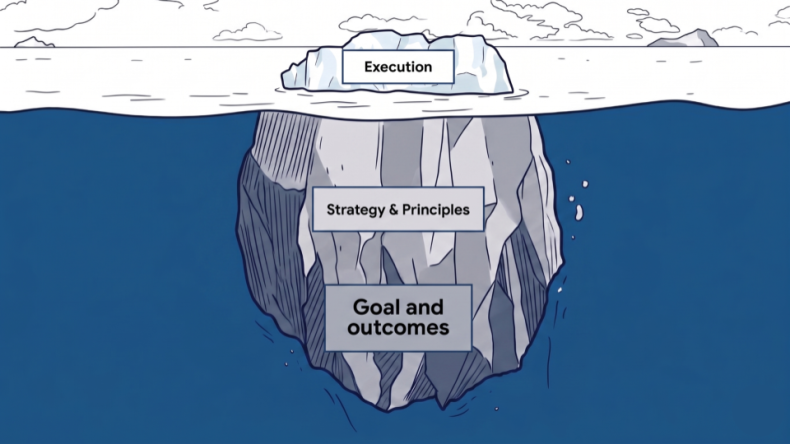
When I started doing this, the critique became less subjective and more structured. I could ask real questions. Why did I use rows of three in this card list? Why this colour here? Why this hierarchy? If I had a reason and a grounded reason tied to the framing, the decision holds. If I could not answer, that was the critique finding me first.
Not intuitive. Intentional.
Write your rationale down as you go
The second shift was documentation, not for handoff, not for the client, but for myself.
Every design is a sequence of decisions. And most designers make those decisions well in the moment, then let them disappear. The rationale lives in their head, and by the time a reviewer asks why, they have either forgotten or can only reconstruct it verbally on the spot.
Writing decisions down as you go changes this completely. Not everything. Just the ones that matter. Why you chose this approach over the alternative. What you were optimising for. What you deliberately left out.
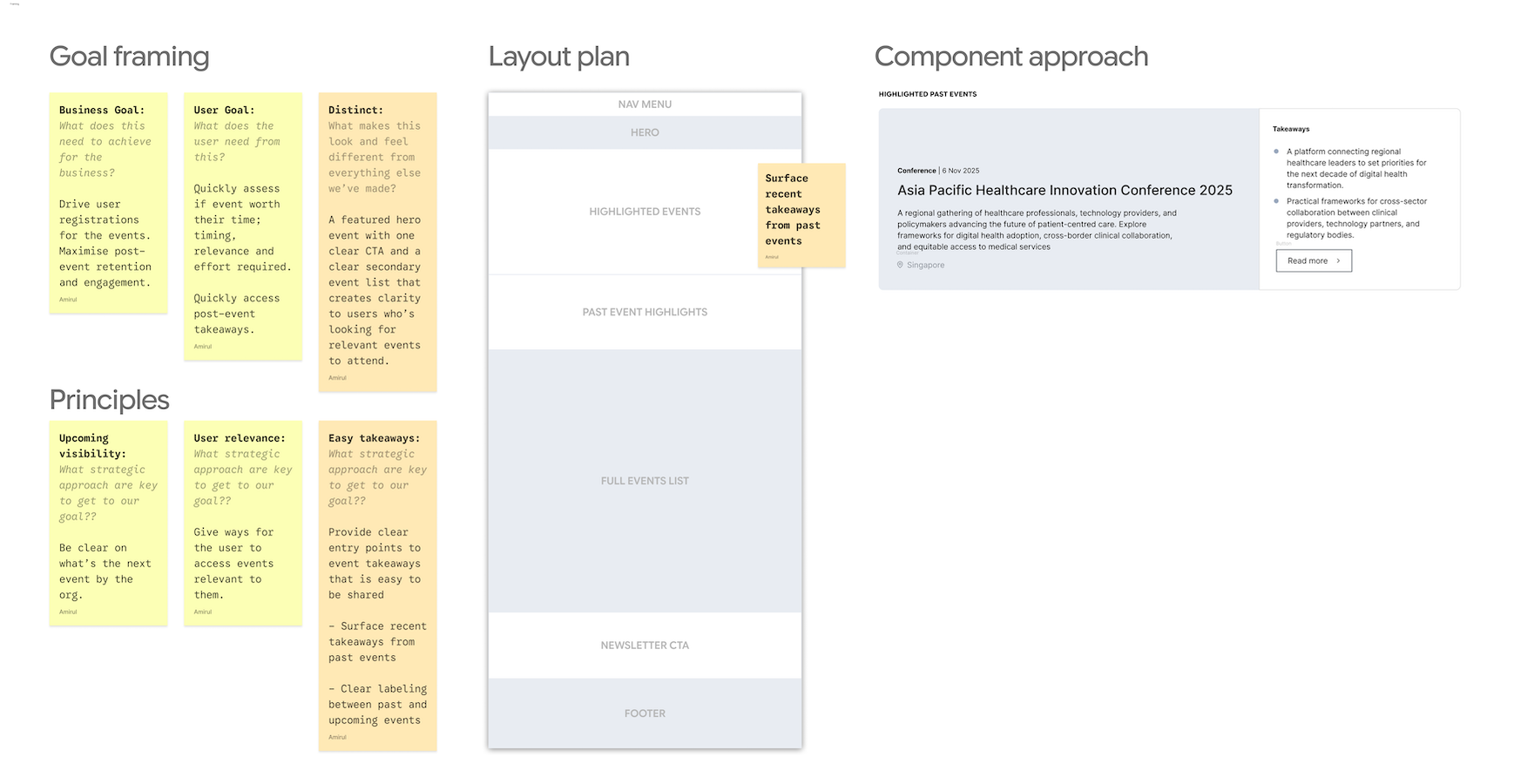
When you include your thinking alongside the work and not just the visual, but the reasoning behind it, two things happen. First, you are forced to articulate what you actually believe, which sharpens the thinking. Second, when you come back to critique, you have something real to interrogate. Not just a screenshot, but a position, grounded against your foundational framing.
A reviewer asking why you made a decision should never catch you off guard. If it does, that is a signal that the critique was incomplete.”
And now with AI where you can augment the design assembly process, it is more and more critical to be conscious about the goal, principles and how to execute at every step along the way. This is what design work look like at Stampede, less executing and assembly, more strategic thinking and tactical planning.
Create distance before you do self-critique
The third thing, and the one most junior designers skip entirely: walking away before you review.
After a session of deep work, you are still the author. Your eye will fill in the gaps, smooth over the rough edges, and read what you intended, not what is actually there. You are too close to see clearly.
The fix is temporal distance. Close the laptop. Do something else. Come back in half an hour, or better, the next morning.
I have finished work in the evening and told myself I would do the self-critique first thing the following day and come back to find things I simply could not have seen the evening before. Not because I was tired. Because I had forgotten what I was trying to do, and that forgetting is exactly the point. Fresh eyes read the work the way a user would, not the way its creator would.
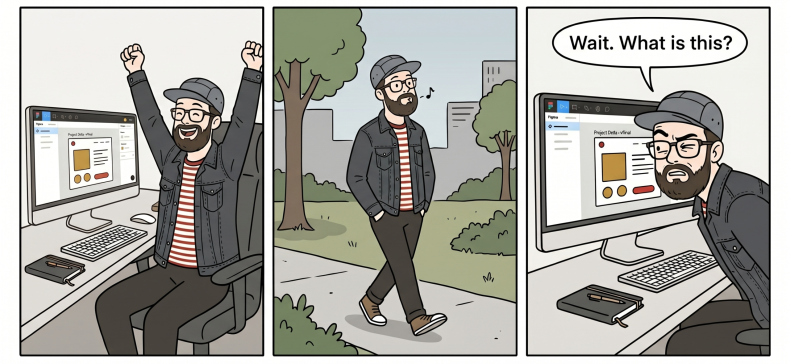
Seasoned designers can do this in real-time. They have developed the ability to zoom out mid-flow, switch modes, and critique in live. That is the goal. But for most of us especially Malaysian middleweights, the shortcut is physical and temporal separation. And it works.
The other thing worth naming: do not be married to what you built. Don’t be afraid to murder your darlings. This sounds obvious, but it is harder than it sounds. When you have spent hours on something, it’s only natural to defend it. You will subconsciously frame your review to protect the decisions you have already made. The only way past this is to approach the review with genuine openness. Treating your own work the way you would treat someone else’s.
Sharpen the eye by dissecting other people’s work
Self-critique gets easier the more you study good work.
Not to copy it. To understand it.
When you open an app, a website, a data visualisation, pause and ask why things are the way they are. What is the grid? Why this spacing? Why does this interaction feel smooth when a similar one elsewhere feels clunky? What is the overarching principles and the intent of the design? What is it trying to solve ultimately?
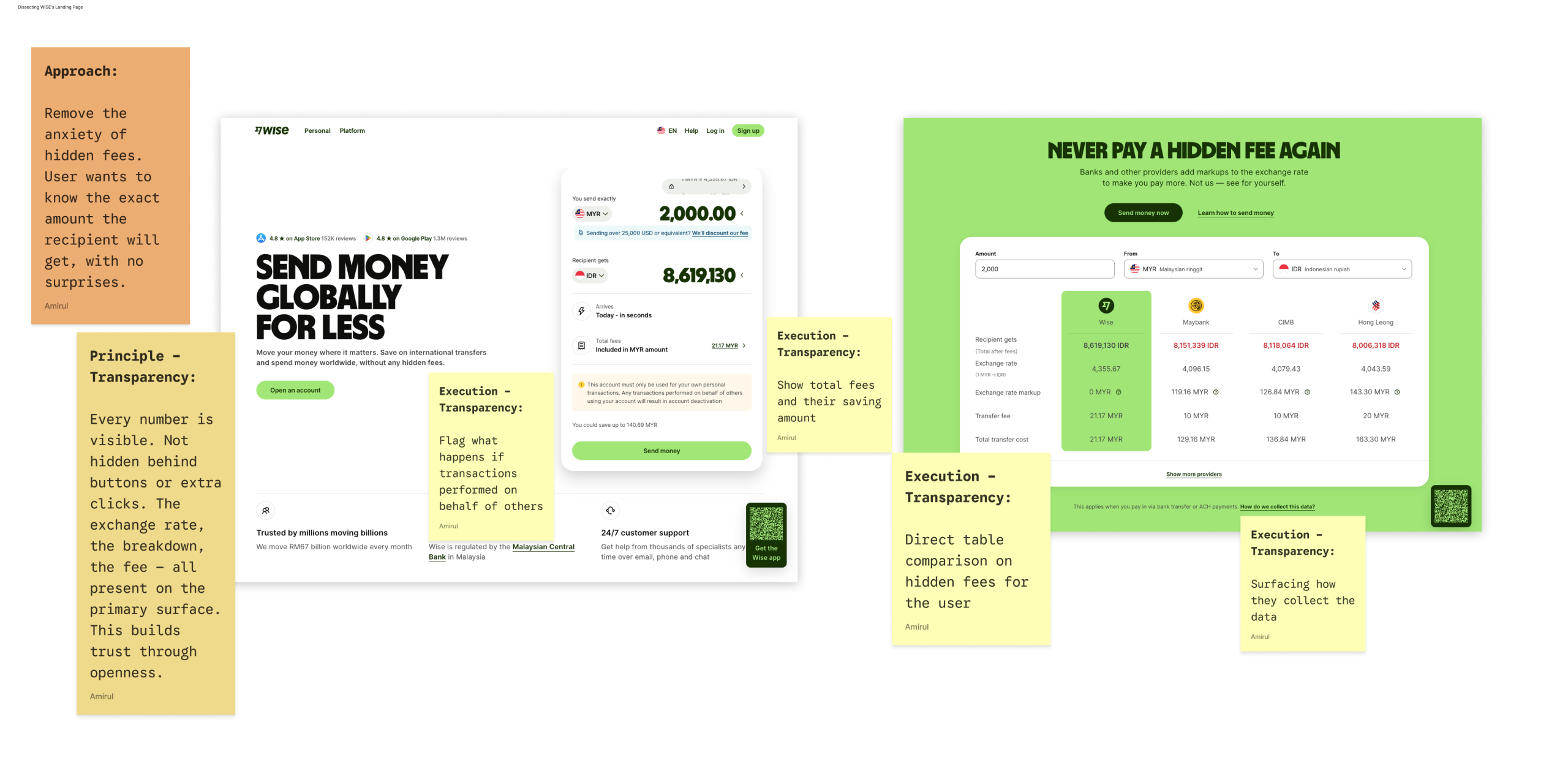
Most of us consume design passively. We notice when something looks nice. Few of us stop to deconstruct why it works and fewer still ask why it doesn’t, even when it looks fine on the surface.
The more you practise this on other people’s work, the more naturally you do it on your own. You start to notice the questions before a reviewer does. You start to ask, before anyone else: if someone looked at this with fresh eyes, what would they challenge?
That shift from creator to first critic, is what the practice is building toward. It’s building that muscle so it comes natural to you the more you mature as a designer.
Where this ends up
Eventually, none of this should feel like extra work. The framing, the documentation, the distance, the dissection. These should become so embedded in how you work that finishing and critiquing are the same act.
For designers who have been self-critiquing for over twenty years, that is already true. The critique is happening constantly, live, almost invisibly. It is in the DNA.
For the rest of us, we build toward it. We make the scaffold visible until it becomes instinct.
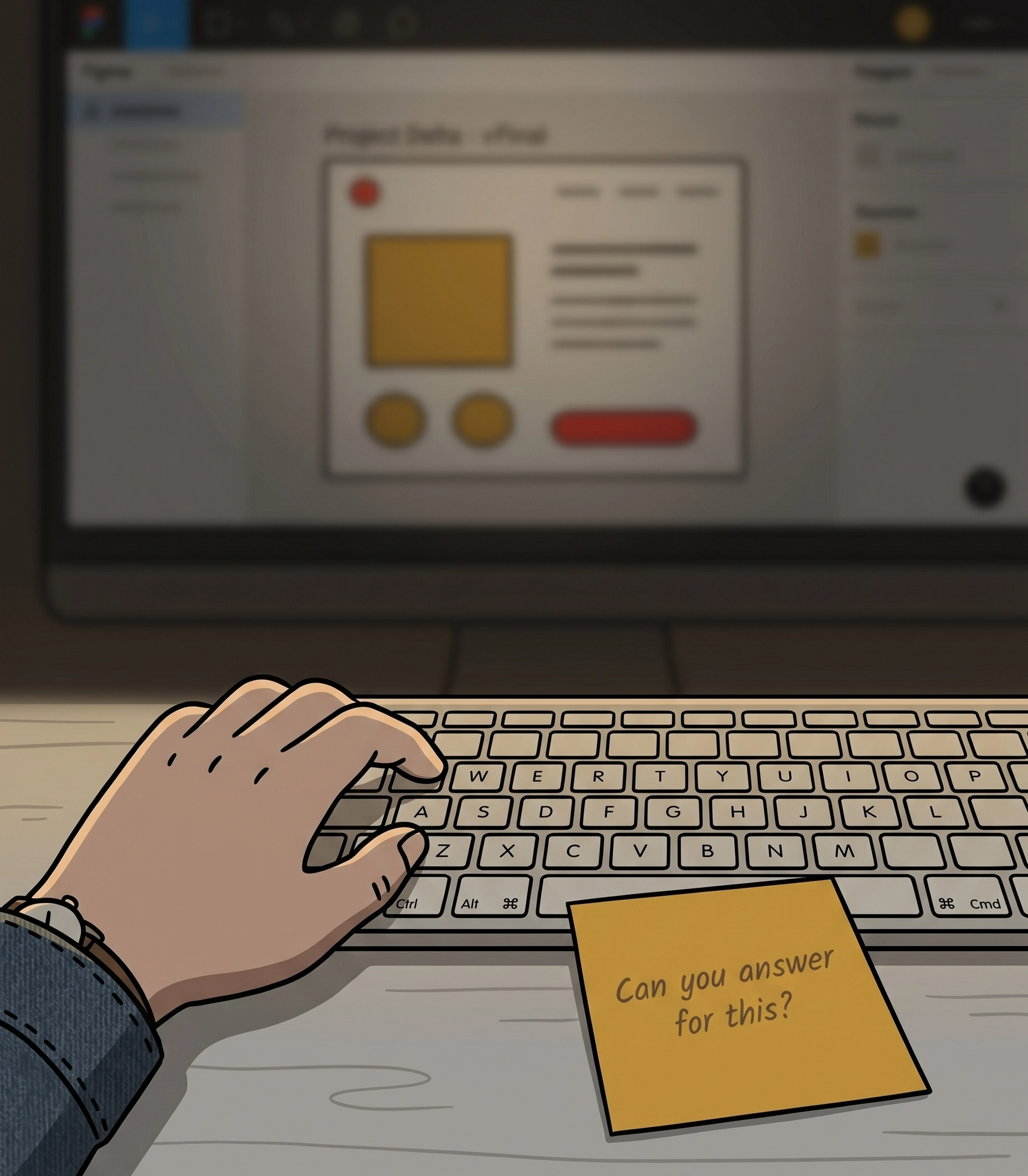
The measure, for now, is simple: before you ship, can you answer for every decision? Not defend it. Just answer for it.
If you can’t, you are not there yet.
